
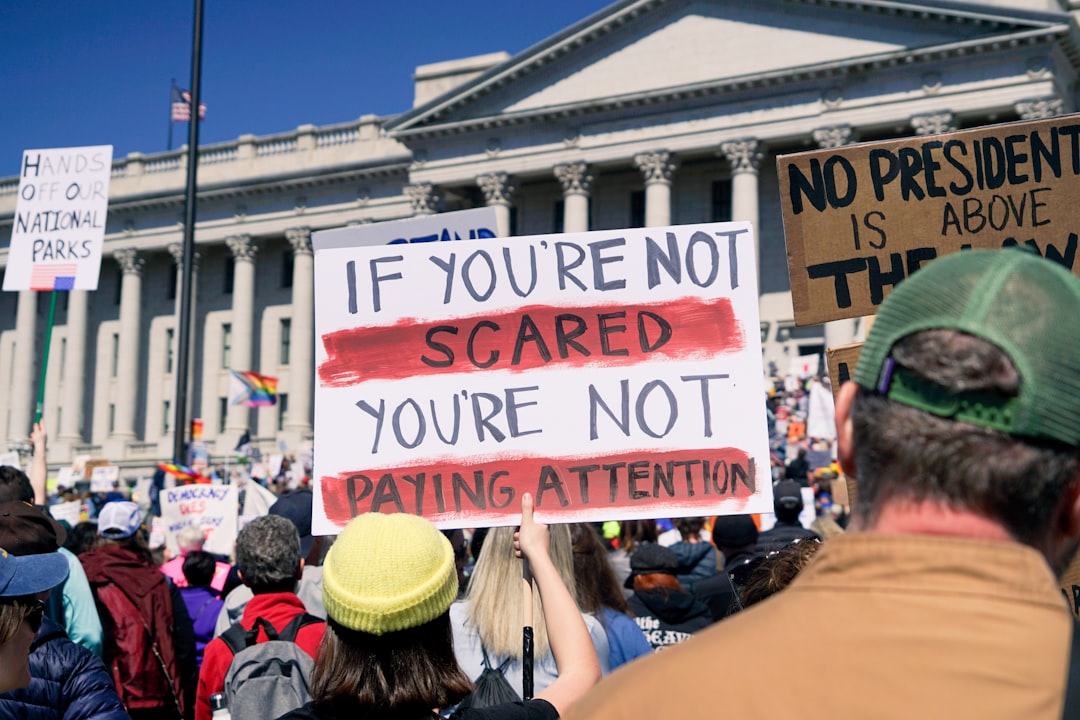
It was a top-secret intelligence report written in 1943. But it could have been written today.

It’s fucking inevitable.
As a day of reckoning looms on the horizon, the ship will spring a leak or twenty.
That’s because rats aren’t renowned for hanging around and going down with all hands-on-deck. They start to look around for something to cling to in the stormy seas. Because if nothing else, they’re survivors.
And so, they begin to chatter. Off the record. Anonymously.
Once they start, they can’t stop.
Perhaps it feels good to get it off their chests.
Could be they’re looking for sympathy.
Or maybe they think that by fessing up, they’ll position themselves on the right side of history.
And so it begins: “The world has come to know him for his insatiable greed for power, his ruthlessness, his cruelty and utter lack of feeling, his contempt for established institutions and his lack of moral restraints.”
“… Human life and human suffering seem to leave [him] completely untouched as he plunges along the course he believes he was predestined to take…”
“… Earlier in his career the world… watched him with amusement. Many people refused to take him seriously on the grounds that ‘he could not possibly last.’ As one action after another met with amazing success and the measure of the man became more obvious, this amusement was transformed into incredulousness. To most people, it seemed inconceivable that such things could actually happen in our modern civilisation.”
No. Not Trump. Though, yeah. I can see why you’d think that.
My fault. Should have been more specific.
This is Adolf Hitler.
Sounds familiar, doesn’t it?
But there’s more. Much more.
You see, a handful of years ago I wrote a couple of TV series on the rise of Adolf Hitler.
It was 2020, and I was deep in the heart of COVID lockdown here in Melbourne. So, yeah. An… er… uplifting project for some pretty dark times.
The good news story at the time was that Biden had won the US election, and many believed the nightmare was over.
Not being wise after the event here, but even then, I was fairly sure Trump would be back. With around 35% of the population signed-up MAGA obsessives in a nation without compulsory voting, it looked like a very tough road for the Democrats.
That suspicion made me sit up and pay attention when I stumbled across an extraordinary document online in the National Archives.
The mind of a monster
Compiled in 1943, it offers a glimpse into the mind of a monster.
It reveals that tyrants—and tyranny—are puzzles to unpick. But they are all cut of the same cloth. And the parallels with what we see at play with the rise of authoritarianism in America and across the globe are chilling.
“The madness of the leader has become the madness of a nation”
Try this, for a start:
“The madness of the leader has become the madness of a nation …. these are not wholly the actions of a single individual but that a reciprocal relationship exists between him and the people and that the madness of the one stimulates and flows into the other and vice versa.
It was not only him, the madman, who created the nation’s madness, but the nation’s madness which created him…. we are forced to consider him, not as a personal devil, wicked as his actions and philosophy may be, but as the expression of a state of mind existing in millions of people.”
Yeah.
The people who wrote this knew what they were talking about.
Here’s another example:
Compensating, much?
“His passion for constructing huge buildings, stadia, bridges, roads etc., can only be interpreted as attempts to compensate for his lack of confidence. These are tangible proofs of his greatness which are designed to impress himself as well as others. Just as he must be the greatest man in all the world, so he has a tendency to build the greatest and biggest of everything.”
Hitler saw himself as an architect.
I mean, not ideologically. Literally.
The centrepiece of Hitler’s plans to redesign Berlin was a triumphal arch, three times larger than Paris’ Arc de Triomphe. That’s almost as tall as the Washington Monument.
“[H]is image of himself must become ever-more inflated in order to compensate for his deprivations and the maintenance of his repressions. He must build bigger and better buildings, bridges, stadia… as tangible symbols of his power and greatness and then use these as evidence that he really is, what he wants to believe he is.”
Trump’s proposed triumphal Arch for Washington is 250 feet, towering over the White House at 90 feet, and the Lincoln Memorial at 100 feet.
Just saying.
Top-secret, classified US Government report
Sun Tzu had it right in The Art of War.
Know thy enemy.
In 1943 as war raged across Europe, the precursor to the CIA launched an unconventional weapon against Hitler.
That’s where this mind-blowing document comes from.
Harvard-based psychologist Walter Langer was put to work psychoanalysing the German leader.
The plan was to understand Hitler’s psychological make-up and devise cunning new ways of defeating him. The methodology Langer applied pioneered the science of criminal profiling that became a thing in the second half of the 20th century.
The Freudian method Langer used to draft Hitler’s psychological profile is not without its problems. Many have challenged the approach because his diagnosis was formed without any direct contact with the subject. There’s plenty of terminology in there that would be dismissed today as “psychobabble.” And being Freudian, there are phallic references aplenty.
But the testimony from informants published in the so-called “Hitler Source Book” stretches to a thousand pages. It included close personal friends and family members, and some of his earliest political allies.
Based on those interviews, Langer struck on some uncannily accurate predictions about the way Hitler’s last days would unfold.
“A weakling masquerading as a bully”
“There will be no surrender, capitulation, or peace negotiations,” Langer wrote. “The course he will follow will almost certainly be the road to ideological immortality, resulting in the greatest vengeance on a world he despises.”
“As the war turns against him,” he said, “his emotions will intensify and will have outbursts more frequently. His public appearances will become much rarer, because he is unable to face a critical audience.”
Langer predicted the failed 1944 assassination attempt known as Operation Valkyrie, and foreshadowed Hitler’s “Scorched Earth” or Nero Decree, saying that, as a ‘weakling masquerading as a bully,’ the Führer would choose to destroy Germany rather than face defeat.
Langer also concluded that Hitler would die by his own hand rather than dying in combat or being taken alive.
I’ve read it so you don’t have to. But if you do want to wade through the report yourself, you can access it here.
But, be warned. It makes for some unsettling reading.
First, some background.
The first “dictators” were the good guys
Yes, really.
When Ancient Rome was up to its neck in shit, a “dictator” was appointed to help navigate the Republic into calmer waters.
The dictator outranked all other political and military leaders. He assumed full powers of the state and complete authority over the military.
But the catch? Although he (because it was always a “he”) was given licence to do whatever was required to sort out a specific problem, once everything was sorted, he’d relinquish his powers.
Dictators were also accountable for their actions. They could be prosecuted after their terms ended if they had stepped out of line during their time at the helm.
The most celebrated Roman dictator was Cincinnatus (458 BCE) who saved the Roman Republic from attack and returned to his farm after a tenure of just sixteen days. And, yes, that’s where “Cincinnati” comes from: named in honour of George Washington’s Society of the Cincinnati, named for the dictator who became a model of Roman civic virtue.
This is why the first dictators were admired.
Even today, many of the people elevated to positions of great power recognise the gravity and responsibility that comes with the mantle they assume. And they treat it with the respect it demands.
Cincinnatus walked away because he was a decent human being.
It’s the same reason America’s Founding Fathers left so many loopholes in the constitution; loopholes now being used to dismantle American democracy.
Having sent the British crown packing, they couldn’t imagine a world where one of their own would bulldoze the pillars of democratic rule they had so carefully erected in its place.
But they were wrong. Because what is true for Cincinnatus is not true for a man who would be king.
Beware the Ides of March
The last Roman dictator was Julius Caesar, of et tu, Brute? fame. He transformed dictatorship from what was supposed to be a “sometimes” thing into a “hold onto this by the short and curlies” thing in 44 BCE, when he nominated himself dictator perpetuo – “dictator in perpetuity”.
It didn’t go down too well with the locals.
A few weeks after his grab for power, Caesar was assassinated on the Ides of March: 15 March, 44 BCE.
But it was the beginning of the end for the Roman Republic. The power grab that followed birthed Rome’s Empirical era, with emperors taking the reins and seizing the powers formerly held by the sometime dictators.
Autocratic populism
Don’t run away. This isn’t going to become a gnarly tangled in jargon. I promise.
But given what we’re talking about here, it’s important to grapple with the idea of populism as a new form of authoritarian leadership.
Three out of every four human beings on the planet live under authoritarian regimes. Yes, I know. That sounds like a lot. But it’s true. There’s research. Really.
The most common form nowadays is what’s called authoritarian populism.
It starts with a charismatic leader who presents himself as an outsider who embodies the will of the people and goes in to bat against corrupt elites and institutions. It’s all about bringing the marginalised into the centre.
Citizens who are disillusioned and feel let down by the status quo find their champion.
Now, where have I heard that before?
Absolute power corrupts absolutely
But, tyranny isn’t just about ideology or behaviour. It’s about distribution of power within a state.
Back in the day, a tyranny meant there was one individual who, along with their closest supporters, monopolised power and wealth.
Rule number one of a tyranny? When a state’s institutions allow a leader to consolidate power. And that power corrupts absolutely.
Greek historian, Herodotus, recorded the debate amongst Persian nobles in 520 BCE or so while they were deciding what to do with their constitution. They recognised that in the absence of checks and balances, in time, the temptation to exploit power would eventually prove irresistible.
And that’s not good for anyone. Because authoritarian regimes are (surprise, surprise) deeply corrupt and poorly governed.
“Opposition to his plans, from whatever side it may come, is sacrilege”
“For God’s sake don’t excite him – which means do not tell him bad news – do not mention things which are not as he conceives them to be.”
“To contradict him is in his eyes a crime of lese-majeste, opposition to his plans, from whatever side it may come, is a definite sacrilege, to which the only reply is an immediate and striking display of his omnipotence.”
Yeah. That’s Hitler again.
As with most of the observations in the Langer Report, putting aside the specifics about Hitler’s creepy relationship with his mother, and alleged penchant for poop and wee-wee (yes, really), it’s dictatorship 101.
Decision-making in an authoritarian regime is erratic at best. And because tyrants surround themselves with bootlickers and yes-men and women, the internal workings are gummed up by repression and woefully poor advice, while the messaging to the outside world is piecemeal and dense… in both senses of the word.
“He can no longer bear either criticism or contradiction.”
“Those who surround him are the first to admit that he now thinks himself infallible and invincible. That explains why he can no longer bear either criticism or contradiction.”
That’s Hitler again.
Strongmen have no checks on their behaviour because they control who occupies the nation’s seats of power.
The people they put in place are either woefully underqualified to do the job and so represent no threat to the will of the tyrant, or they’re so beholden to him and his interests they’ll never turn on him.
This was Hitler himself speaking: “I do not look for people having clever ideas of their own but rather people who are clever in finding ways and means of carrying out my ideas.”
Because in an authoritarian regime, there is only one voice.
“If you try to tell him anything,” one of Hitler’s close associates said, “he knows everything already. Though he often does what we advise, he laughs in our faces at the moment, and later does the very thing as if it were all his own idea and creation. He doesn’t even seem to be aware of how dishonest he is.”
Pointing out how familiar this sounds is becoming redundant.
“He has fallen in love with the image he, himself, created…”
The most peculiar thing about authoritarian regimes is that even when things turn to shit, as they invariably do, the strongman’s most faithful followers refuse to turn on their master.
Their faith remains intact, even as the tyrant grasps onto power by deliberately creating conditions that make it unbearable for his people.
For one thing, strongmen love a state of war. Almost two-and-a-half thousand years ago, Aristotle wrote that “the tyrant is a stirrer-up of war, with the deliberate purpose of keeping the people constantly in need of a leader.”
Aristotle knew stuff. You know what else he said?
[The tyrant aims] to set men at variance with one another and cause quarrels between friend and friend and between the people and the notables and among the rich. And it is a device of tyranny to make the subjects poor…that the people being busy with their daily affairs may not have leisure to plot against their ruler. Instances of this are the pyramids in Egypt … and the building of the temple of Olympian Zeus … (for all these undertakings produce the same effect, constant occupation and poverty among the subject people).”
As things change, so they remain the same, right?
Just ask the man who knew the inner workings of Hitler’s addled mind better than most.
“He has managed to convince millions of other people that the fictitious image is really himself,” Langer wrote. “The more he was able to convince them, the more he became convinced of it himself on the theory that eighty million people can’t be wrong. And so he has fallen in love with the image he, himself, created and does his utmost to forget that behind it there is quite another person who is a very despicable fellow.”
“[W]e find the spectre of possible defeat and humiliation as one of his dominant motivations.”
Yep. Hitler again.
What makes the Langer report so compelling is that it was written during Hitler’s lifetime and drew on first-hand accounts from people who knew him well.
It kicked off a cottage industry of people trying to the psychological make-up of the hideous little moustachioed Austrian after his ghastly reign came to an end.
In short, he was a neurotic psychopath bordering on schizophrenia who, “when cornered, would destroy everything around him before taking his own life.”
He ticked the boxes of what one psychologist describes as “a ‘Big Six’ constellation of behaviours: sadistic (cruel), paranoid (hypersensitivity to perceived threats), antisocial (disregarding the rights and feelings of others), narcissistic (self-centered, self-aggrandizing, power-seeking), schizoid (loners with poor emotional attachments to others) and schizotypy (weird thoughts, unusual beliefs, socially awkward).”
Most of all, people displaying this kaleidoscope of personality disorders are “not bothered by or are aware of their negative effect upon others. This abnormal behaviour category has the diagnostic label disorder because it so often causes other problems for the people who interact with the person with a personality disorder.”
Know thy enemy
If you’re not already exhausted, what you’ll find below is a list of excerpts I’ve pulled out of Langer’s report. Or you can just skip straight forward to the conclusion if you’re convinced already. But it makes for interesting reading.
I’ve always wondered how Nazi Germany happened. How was it that one man was able to drag an entire nation into a Dantean inferno?
Watching what’s going on in America today, I no longer wonder.
And if you want to understand the strongmen at the helm of authoritarian regimes around the globe, Langer’s report should be compulsory reading.
I present this here as a case study. Nothing more. Take from it what you will….
“He is, in fact, unable to face real opposition on any ground…”
“We find this same insecurity at work when he is meeting new people and particularly those to whom he secretly feels inferior in some way…. He is, in fact, unable to face real opposition on any ground. He cannot speak to a group in which he senses opposition but walks out on his audience.”
“He wants things his own way and gets mad when he strikes firm opposition on solid ground.”
“Never admit a fault or wrong…”
“His primary rules were: never allow the public to cool off; never admit a fault or wrong; never concede that there may be some good in your enemy; never leave room for alternatives; never accept blame; concentrate on one enemy at a time and blame him for everything that goes wrong; people will believe a big lie sooner than a little one; and if you repeat it frequently enough people will sooner or later believe it.”
“He has a matchless instinct for taking advantage of every breeze to raise a political whirlwind. No official scandal was so petty that he could not magnify it into high treason.”
“He was greatly adverse to experts…”
“He remembers things that he has heard and has a faculty for repeating them in such a way that the listener is led to believe that they are their own.”
“Of secondary importance is the training of mental abilities.”
“What is known as the mastery of material was quite unimportant to him. He quickly became impatient if the details of a problem were brought to him.”
“He was greatly adverse to experts and had little regard for their opinion.”
“When he was then confronted by contradictory facts he was left floundering.”
“His judgments are based wholly on emotional factors and are then clothed with an intellectual argument.”
From Hitler himself: “Over-educated people, stuffed with knowledge and intellect, but bare of any sound instincts…. These impudent intellectuals who always know everything better than anybody else.”
“He is afraid of logic…”
“He is unable to match wits with another person in a straight-forward argument. He will express his opinion at length but he will not defend it on logical grounds.”
“He is afraid of logic…. he evades the issue and ends by throwing in your face an argument entirely remote from what you were talking about.”
“He does not think things out in a logical and consistent fashion, gathering all available information pertinent to the problem, mapping out alternative courses of action and then weighing the evidence pro and con for each of them before reaching a decision.”
“His mental processes operate in reverse. Instead of studying the problem as an intellectual would do he avoids it and occupies himself with other things until unconscious processes furnish him with a solution. Having the solution he then begins to look for facts which will prove that he is correct…. his thought processes proceed from the emotional to the factual instead of starting with the facts as an intellectual normally does.’
“He was unable to justify his point of view on an intellectual level—he was at a terrible disadvantage. In order to remedy the situation he began reading all kinds of political pamphlets and attending political meetings but not with the idea of understanding the problem as a whole, which might have enabled him to form an intelligent opinion, but to find arguments which would support his earlier conviction. This is a trait that runs throughout his life. He never studies to learn but only to justify what he feels.”
“He has a passion for the latest news and for photographs of himself.”
“If the official Party photographer, happens to appear or someone happens to enter his office with a newspaper he will interrupt the most important meeting in order to scan through it.”
“Very frequently he becomes so absorbed in the news or in his own photographs that he completely forgets the topic under discussion.”
“He seldom sits in a cabinet meeting because they bore him.”
“When he is confronted by a difficult situation…. his procrastination becomes most marked. At such times it is almost impossible to get him to take action on anything. He stays very much by himself and is frequently almost inaccessible to his immediate staff. He often becomes depressed, is in bad humour, talks little, and prefers to read a book, look at movies, or play with architectural models.”
“He works for a time and as soon as the job is underway ‘he loses interest in it’ and slips back into his leisurely life in which he does nothing except what he is forced to do or likes to do.”
“[I]t was almost impossible to keep him concentrated on one point…. his attention would be distracted by the sudden discovery of the newspaper and he would stop to read it, or he would interrupt your carefully prepared report with a long speech as though you were an audience.”
“He dislikes desk work and seldom glances at the piles of reports which are placed on his desk daily. No matter how important these may be or how much his adjutants may urge him to attend to a particular matter, he refuses to take them seriously unless it happens to be a project which interests him.”
“He withdraws from society, is depressed and dawdles away his time until ‘the situation becomes dangerous’ then he forces himself to action.”
“He seldom sits in a cabinet meeting because they bore him. On several occasions when sufficient pressure was brought to bear he did attend but got up abruptly during the session and left without apology. Later it was discovered that he had gone to his private theatre and had the operator show some film that he liked.”
“Even after he became the undisputed leader of the nation, he could not rest in peace.”
“[H]e feels insecure in his new role and in order to rid himself of his uneasiness he must prove to himself, over and over again, that he is really the type of person he believes himself to be. The result is a snowball effect. Every brutality must be followed by a greater brutality, every violence by a greater violence, every atrocity by a greater atrocity, every gain in power by a greater gain in power, and so on down the line.”
“Each successful step served to convince him that he was the person he believed himself to be but brought no real sense of security. In order to attain this he had to go a step higher and give additional proof that he was not deluding himself. Terror, violence and ruthlessness grew with each advance.”
“Even after he became the undisputed leader of the nation, he could not rest in peace. He projected his own insecurities onto the neighbouring states and then demanded that they bow to his power…. It was also inevitable that the war would be as brutal and pitiless as possible for only in this way could he prove to himself that he was not weakening in his chosen course but was made of stuff becoming to his conception of what a victor should be.”
“He can never take a joke on himself.”
“This is not a single personality but two which inhabit the same body and alternate back and forth. The one is a very soft, sentimental and indecisive individual who has very little drive and wants nothing quite so much as to be amused, liked and looked after. The other is just the opposite – a hard, cruel and decisive person with considerable energy – who seems to know what he wants and is ready to go after it and get it regardless of cost.”
“He takes himself very seriously and will flare up in a temperamental rage at the least impingement by act or attitude on the dignity and holiness of state and Führer.’
“Almost anything might suddenly inflame his wrath and hatred… But equally, the transition from anger to sentimentality or enthusiasm might be quite sudden.”
“Close collaborators for many years said that he was always like this – the slightest difficulty or obstacle could make him scream with rage or burst into tears.”
“The whole personality is a grossly exaggerated and distorted conception of masculinity as he conceives it. The personality shows all the earmarks of a reaction formation which has been created unconsciously as a compensation and cover-up for deep-lying tendencies which he despises.”
“Roosevelt, however, seems to be an enigma to him.”
“He is unable to understand how a man can be the leader of a large group and still act like a gentleman.”
“He… does not give anybody an opportunity to speak, while he himself makes fun of everybody.”
“Roosevelt, however, seems to be an enigma to him. How a man can lead a nation of 130,000,000 people and keep them in line without a great deal of name-calling, shouting, abusing and threatening is a mystery to him.”
“Vicarious gratifications through fantasies become substitutes for the satisfaction obtained from real achievements.”
“If a thing is good for the Party a crime is not a crime.”
“If it is good for the country, a crime is not a crime.
“The course he will follow will almost certainly be the one which seems to him to be the surest road to immortality and at the same time wreak the greatest vengeance on a world he despises.”
From Hitler himself: “We shall not capitulate… no, never. We may be destroyed, but if we are, we shall drag a world with us… a world in flames…. we should drag half the world into destruction with us and leave no one to triumph.”
“Each defeat will shake his confidence… and limit his opportunities for proving his own greatness to himself…. he will feel himself more and more vulnerable to attack from his associates and his rages will increase in frequency.”
“He will fight as long as he can with any weapon or technique that can be conjured up to meet the emergency…. He will probably try to compensate for his vulnerability by continually stressing his brutality and ruthlessness.”
Where are the cool heads?
Did you make it through all that without suffering such chronic eyeroll you’re suffering permanent eyestrain?
It’s quite the thing, isn’t it?
The biggest cautionary note from all this is that when mortality comes knocking, the only thing that puts a stop to a tyrant’s most destructive impulses are the cool heads of those around him.
Towards the end of his life, Hitler was a junkie and a fucking mess. He was on barbiturates to help him sleep, an early form of oxycodone, a bull-semen based testosterone booster, twice-daily shots of cocaine, and a form of crystal meth. He was a threat to himself and everyone around him.
Increasingly erratic, the only reason his scorched earth policy wasn’t carried through was that Albert Speer and other on-the-ground military leaders refused to cooperate.
Deep scars
When Hitler took his own life, as Langer had predicted, Germany’s nightmare was over, and it could begin to rebuild.
But the scars left behind were deep. Because tyrants shape their world in their own image. And there’s no getting over that quickly.
As Langer put it, two years before Hitler’s death: “It is as though he has paralysed the critical functions of the individuals and has assumed the role for himself. As such he has been incorporated as a part of the personalities of his individual supporters and is able to dominate their mental processes.”
“It is this phenomenon which lies at the very root of the peculiar bond which exists between Hitler, as a person, and the people and places beyond the control of any purely rational, logical or intellectual appeal. In fighting for Hitler these persons are now unconsciously fighting for what appears to them to be their own psychological integrity.”
Because strongmen are a symptom of a much more serious societal malaise.
Like gangrene, tyranny never blossoms on a healthy limb
“To remove him may be a necessary first step,” wrote Langer, “but it would not be the cure. It would be analogous to removing a chancre without treating the underlying disease…. we must ferret out and seek to correct the underlying factors which produced the unwelcome phenomenon.”
That is the takeaway from all this for those of us who are a little bit in love with democracy.
We must tend our garden. Prune the deadwood and root out the diseased growth. Water, fertilise, and nurture the soil.
It’s the only way we can ensure the rot does not take hold.
What are your thoughts on this?
Let me know what you think below.
Because this is a conversation we must be having. And we must be having it now.
