Why making passata might be the most subversive thing I do all year and why dependence is quietly killing us.

Want to fight enshittification? Start with tomatoes.
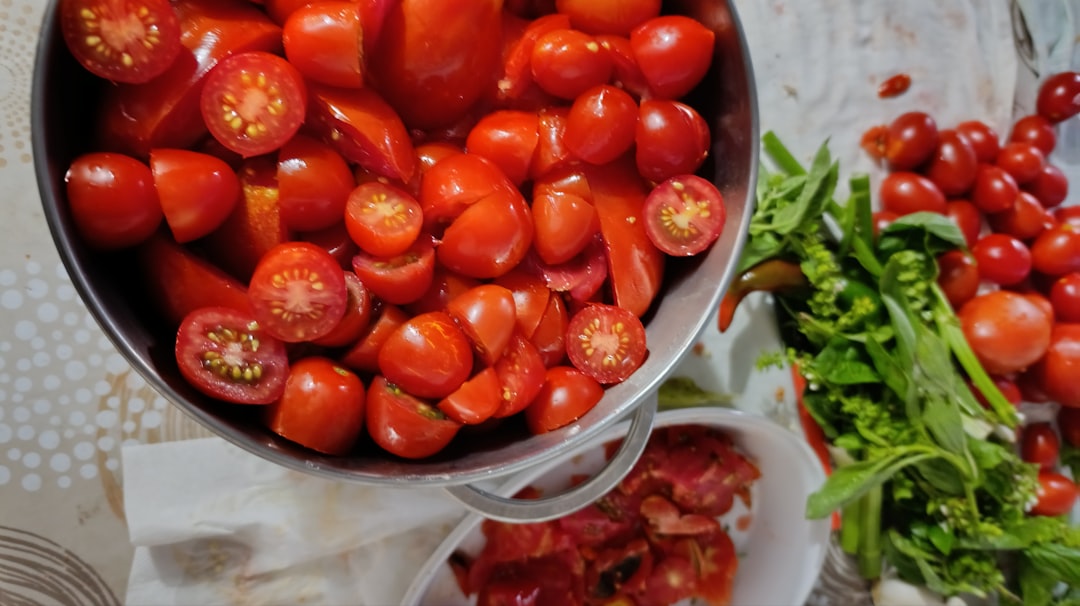
Last week, I took delivery of fifty kilos of them.
That’s right. Fifty.
No, I’m not stocking up for a Trump visit Down Under. That would be a criminal waste.
They were destined for passata and tomato soup, jars of which now line my garage wall.
Am I saving myself any money?
Not on your fucking life. I can buy perfectly serviceable jars of passata at the local grocer for $3.99. And cans of soup? Under two bucks.
I don’t want to work out what mine cost me. Factor in labour, and I won’t be planning a stall at the local farmers’ market anytime soon.
But that’s not the point.
I do it because it makes me feel powerful and useful.
Yes, really. Might sound a bit weird unless you’ve done it yourself. But those jars make me feel invincible. If the world spirals any further down the septic system, at the very least, I know I’ll be able to keep the family alive for at least a month.
Provided they don’t tire of tomato soup and pasta.
It’s all about keeping self-sufficiency alive and maintaining archaic skills largely gone the way of the dodo in the West.
My grandmother preserved fruit and vegetables as I do, and as her grandmother did before her. And her grandmother before that. Et cetera, et cetera, et cetera.
And each year, I crack out the Vacola preserver and the Fowlers jars with my husband, son, and daughter, and we do it together.
As I was up to my elbows in tomatoes, it got me thinking about a brilliant and very funny Norwegian clip I posted a week or so ago that went a little viral.
Why did it speak to me?
Because it’s a powerful visual embodiment of a thing I’ve been banging on about for years. And it’s the reason I persist with my annual passata endeavour, even though it makes no economic sense.
I call it my tomato theory.
Yes, another of my theories… sorry about that. But bear with me. I reckon you’ll like it.
Wind it back a couple of decades, and the tomatoes we greeted in the supermarket fruit and veg aisles were things of wonder. Sweet, juicy, and red. Most of all, they tasted and smelled like… tomatoes.
Let’s say they cost $2.99 per kilo back then. No idea if that was the actual price, and I can’t be bothered looking it up. That’s not the point of the exercise.
But suddenly, something happened.
The things stacked in piles became nasty, firm pink things that looked more like sun-bleached cricket balls than tomatoes. They were flavourless, firm, and smelled of absolutely nothing.
Price? $2.99.
Disappointing tomatoes. Disappointed Meaghan.
Things rolled along like that for a while, and I gave up buying tomatoes unless I was lucky enough to find myself at a farmers’ market, where the real deal was still available.
It was also what inspired me to get a few tubs and start growing my own in the small space at the back of the apartment I was living in at the time. I’ve continued to do that ever since, so I suppose I should be grateful.
But I digress, as I so often do.
Back to the supermarket tomatoes.
One day, the OG tomatoes reappeared.
They were red, sweet, and juicy, just the way I remembered them.
Though this time, they had stalks still attached (all the better to make them smell more tomatoey).
They had themselves a fancy new name: “Truss Tomatoes.”
They also had a fancy new price. $7.99 per kg.
Yes, but REAL TOMATOES! Huzzah!
See what happened? It only took a year or so for us to happily hand over twice as much for something we used to take for granted.
We are slaves to a system that can manipulate us because we are utterly dependent upon the things it produces.
If we want something that tastes like a tomato, we have to pay more for it.
We have no choice because we’ve surrendered our ability to provide for ourselves.
And it’s designed that way. You’re not supposed to be self-reliant, because that means you’ll spend less money. A lost skill is another uptick in sales. Lose a button on a shirt, and if you don’t have a sewing kit, or don’t know how to sew it back on, what are you going to do? Well, most of us will toss the shirt away and buy a new one.
But I’m lucky enough to know how to do those things.
My mother, and both my grandmothers, taught me how to darn, how to hem, how to knit, and how to sew a button back on. At one point when I was at university and things were a bit tight, I even had a go at making my own clothes.
For so many of us in the West, those skills are a dead art.
I know that because when my daughter and her friends wanted to remodel their school uniforms for their last day of high school, they had to come over to our place, because we were the only household with a sewing machine. And, most importantly, someone who knows how to use it.
I don’t say that to be a smartarse. I was fortunate enough to be raised by country women who were forced to be self-reliant.
For my grandmothers, they weren’t choices.
They weren’t luxuries. They weren’t “hobbies.” They were survival skills.
I used to tease one of my grandmothers affectionately as she pleaded with us to open our gifts carefully at Christmas so she could salvage the wrapping paper. Each year, her gifts came to us in slightly wrinkled gift wrap, with spots where sticky tape had lifted the pattern.
Both my grandmothers raised families through the Second World War.
In a can beneath the sink, they saved “dripping” (just a nice way of saying “fat”) from frying chops and bacon to reuse in their cooking and to eat on toast.
They raised animals on their farms.
Vegetables were grown in the veggie patch; fruit in the orchard or on the vines. My grandmothers grew or made everything they needed. Wool, milk, eggs, meat, hide, and fertiliser. Not a scrap was wasted.
Mealtime when I went to stay could be a lucky dip, with liver, kidneys, tongue, and tripe… let’s not mince words – it’s stomach… on the menu. And let’s not forget the sausage casings made out of, yeah, intestines. That’s right. Poo pipes.
I was a spoiled city kid.
I didn’t grow up during the war. No amount of “white sauce” with parsley could convince me that eating cow guts and poo pipes was a great idea. The only meat I was interested in eating was muscle.
But I did understand why my grandmothers did what they did, because I was also involved in the story of life on a farm. When you see what’s involved with bringing that meat to the table, it makes you look at things differently.
Yes, it could have turned me into a vegan. It did my sister. But not me. It did make me appreciate how important, and how precious, food is.
Imagine helping a cow deliver her calf, which I have done many times. One particularly memorable birth had me holding together the walls of a cow’s uterus after a caesarean birth as the vet stitched the muscle back together. Both mother and calf survived and thrived.
Farmers love their animals, no matter what their ultimate destination may be. I saw a neighbour weep when one of his steers—an animal ultimately headed for the BBQ—got caught in a fence and broke its leg. He wept as he raised a gun to its head to put it out of its misery, not because he was losing a source of income, but because he hated seeing a creature he had raised and cared for in pain.
That’s why people who tend the land don’t waste.
Because they know what it takes to stock the fridges and mile upon mile of shelves in the supermarket.
Meanwhile, we grab a trolley and stack it with far more that we’ll ever need.
There’s such a disconnect between production and consumption, that we don’t stop and think about what it is that we’re tossing out when the bread gets a bit dry round the edges, or one of the strawberries in the punnet is a little fuzzy.
Anyone who has ever grown or made something from scratch—from a pot of basil, to a handknitted jumper—knows what a tragedy that is.
I learnt from my grandfather a deep love of growing my own vegetables.
Sure, there’s the economic consideration… I just can’t with the $4.95 packet of parsley when I just need a sprig or two and the rest will end up going to green water in the bottom of the veggie drawer.
So, I have pots of all the herbs I regularly use. Oregano, thyme, parsley, spring onions, rosemary, plus basil in spring, and coriander in winter.
And don’t get me started on the lemons that are now worth their weight in gold. What the fuck is that, Australia? Since when did we get rid of the lemon tree in the back yard?
But it’s a lot more than the money.
It’s the deep satisfaction I get from gathering cherry tomatoes, beans and cucumbers off the vine.
And then, there’s the flavour. Nothing like it.
There’s a reason for that. As soon as a tomato is picked, its sugars start converting to starches.
Back to my tomato theory, wholesale fruit and veggies are picked when they’re underripe. That means they’re firmer and less likely to spoil, which reduces wastage and handling costs. But then they’re kept in cold storage, and treated with gases and temperature control to ripen them when it’s time to take them to market. https://www.growveg.com.au/guides/the-secret-to-growing-great-tasting-vegetables/ Which is why those “new” tomatoes had as much flavour as Styrofoam.
Taste a bean or a cucumber picked right off the vine, or a potato dug out of the earth, and you’ll struggle to go back.
Modern consumerism has turned us into dependents.
And it’s not just the food industry.
That clip I posted was all about making things shitty. I felt that to my core, because for a while there, I ran the art department in one of Australia’s biggest auction houses. Yeah, I know. I’ve done lots of silly stuff.
But one of the things I learnt there was how distressingly cheap antique furniture is nowadays.
You could buy a two-hundred-year-old oak table solid enough to dance on for less than the cost of a flat-pack IKEA bench that will struggle to support the weight of a chubby domestic cat.
And when that depressingly awful chipboard sandwiched between Laminex thing loses a leg, your only choice is to toss it out. It’s designed that way.
IKEA doesn’t want you to repair it.
IKEA wants you to replace it.
You see this enshittification everywhere nowadays.
It’s even more insidious than inbuilt obsolescence.
Another example? Streaming services. It’s the tomato theory all over again.
Used to be we “paid” for free-to-air TV with our time—the time we spent watching ads. Those ads gave the free-to-air broadcasters the money they needed to make the programmes we wanted to watch. It was a healthy symbiotic relationship.
Then came the streamers. Sure, we had to pay for a subscription. But Netflix was so cheap, right? And—guess what?—no ads! Got to be worth it just for that.
Only, what happened next? Yeah. Ads. If you want your streaming service ad-free, you’ll have to pay more.
So now we pay to watch… ads.
But, hang on. Didn’t we once watch ads for free?
We in the West have been bent over a barrel and done without lube.
And we’ve gone there willingly.
Look at subscriptions. Was a time when even if things went bad and you lost the roof over your head, you’d have your CD and DVD collection and photo albums to take with you.
Today, they’re all in the fucking cloud, whatever that is.
Can’t afford your Spotify or Netflix subscription anymore? There goes your favourite album and TV series.
Bit short this month and can’t pay your iCloud bill? Goodbye family photos.
We’ve willingly locked ourselves into a system that rewards complacency, discourages self-reliance, and encourages profligate waste.
I’ll never forget the day I went into an office supplies store to buy two replacement ink cartridges for my printer.
$38 each.
I made a comment about the cost to the helpful man at the counter, who suggested I consider the new printer on sale that cost less than the two refills I was about to purchase.
A printer that came with two cartridges.
Sure, he was just being helpful. But what the actual fuck?
I know it’s all part of the plan… the hardware is cheap to lock us into the hamster wheel that has us throwing money at them on a regular basis for essential parts.
The cheap razor = expensive blades.
The cheap printer = expensive ink refills.
So, where did it all go so wrong?
The 20th century was meant to be when the industrial and technological revolution really paid off for humankind.
First, there were all those fabulous “labour-saving devices.”
Guess what, ma’am?
We’re setting you free! Less time spent chained to the sink!
No more wasted hours heating the copper to wash the family’s filthy gear!
And throw away those pegs, because we’ve got this thing called a “clothes dryer”!
No, it’s not witchcraft, ma’am! It’s technology! Praise be!
And how about those cars? What a convenience! Imagine all the things you’ll be able to do with all that spare time and the means to get from A to B in a jiffy! Just marvellous!
If only.
Because that’s not quite how it worked out, is it?
Now we’re working to pay for those devices and technology to do things we once did for ourselves.
Pay-in-4, lease-hire labour-saving devices. We’re working to pay for things that were invented to save us from working… Can you see how ridiculous that is?
And now we have AI.
We’re outsourcing intelligence.
We’re paying a machine to think for us.
Not only is it ridiculous, it’s dangerous.
Because this system has made us utterly dependent which means we lack the skills we need to be self-sufficient. Which, in troubled times like these, are more important than ever.
So, what am I doing about it?
I’ll start by confessing that I do have the luxury of choice. I’m lucky enough to be able to afford to do many of these things.
That good fortune means I also feel obliged to do them in acknowledgment that there are many who would do the same, but don’t have the same advantages.
For one thing, I avoid the big three supermarkets here in Australia—Coles, Woolworths, and ALDI—unless absolutely necessary and support small, local businesses instead. Because when the small suppliers go, the big guys have us over a barrel. Choice goes out the window.
I also buy most of our fruit and vegetables from a not-for-profit social enterprise called Ceres that home-delivers produce purchased from local farmers.
If we need to purchase something, we check FaceBook marketplace first to see if it’s available second-hand. My last two acquisitions were a food processor… and more jars for my tomato bottling enterprise.
Most of all, I’m passing all this onto my kids.
Sure, there are days I’m sure I drive them bonkers with the nagging about how “best before” and “use by” dates are not the same thing, and that nature gave us a nose and taste buds to detect things that will kill us.
They also see it in practice. When I strong-arm them into helping me make bottles of tomato sauce that probably cost just shy of $50 a bottle, they understand how much work goes into it.
It’s not like the $3.99 bottles you get at the supermarket. With those, you’re happy to use half the bottle, then toss the rest a month later when it looks like a science experiment gone wrong.
Not my passata. If I have any leftover from a bottle, I put it in a ziplock bag and freeze it.
As for the packaging, I wash the jars, lids and clips, and put them away in the garage to reuse next year.
Maybe one day they’ll thank me.
Let me tell you the story of one of my favourite woollen scarves.
When I was a little thing, my mum and dad gave me and my sister a black lamb. We raised him in the backyard of our inner-city house in Melbourne. Used to walk him around the block on a lead.
Yeah, the ‘70s. Crazy times.
Eventually, he outgrew our backyard and retired to my grandmother’s farm, where we gave him a small harem of lady sheep for company. Every year, a neighbour came in to take the clippers to “Lambie” (no prizes for originality), his ladies and their offspring… turns out Lambie was quite the Don Juan.
It was beautiful Merino wool, so grandma paid the neighbour in kind with a share of the wool. She did the same with another friend who washed and spun it into skeins that still smelt of lanolin.
Fast-forward a few decades, and the time came to clean out my grandma’s house.
She was gone by then, and the time had come to sell the family farm.
In the top cupboard of a wardrobe, I found a plastic bag stuffed with Lambie’s wool. It was still beautiful. And it still smelled of lanolin.
I gave the wool to my husband’s grandmother; another fine, tough country woman who wielded a good knitting needle.
She used Lambie’s wool to knit babies’ booties and jumpers to donate to a local charity in the country town of Holbrook.
She also made me a scarf.
Each winter, as I tuck it beneath my coat, I think of her. I also think of my grandmother, and I think of Lambie, and the very long journey it took for that scarf to find its way to my winter woollies drawer.
My mum is still with me, although both my grandmas are long gone. So is my husband’s Nanna, although she made it to 101.
Their gifts live on in me.
I don’t save the wrapping paper. Not yet. But I do rescue any ribbon that makes it through the unwrapping onslaught, and the lengths of coloured bunting that come with bunches of flowers.
Every time I unpack the Vacola from the garage and start rinsing the crates of tomatoes in the kitchen sink, I honour their legacy.
I will always be grateful for the things they taught me that I am passing to my own children.
And I plan to be that grandma to their children.
