Gallipoli was a military failure—but it shaped the values Australians still identify with today.

Want to understand Australia?
Then find your way down to a local war memorial before dawn on the 25th of April.
Anzac Day.
As you stand there in a sombre huddle with a group of people gathered beneath an Australian flag unfurling in the morning breeze, the sun will peek above the horizon, and a lone bugle will play the Last Post.
There will be tears.
And you need to remember one thing.
Anzac Day is Australia’s most significant national holiday. And you’re there to commemorate an epic military failure.
Yes, you read that correctly.
Anzac Day recalls the day our soldiers were handed their backsides on a plate by a Turkish army hellbent on defending its homeland.
If you can begin to unpick whatever the fuck that says about us, you’ll find yourself much closer to understanding the things that make us who we are as a nation.
This is all said with the caveat that what I’m talking about here is post-European Australia. Not the mind blowingly expansive history of the First Australians who have called this place home for at least 65,000 years.
They have their own origin stories. And they’re a hell of a lot older than the ones I’m talking about.
This is the story of the birth of modern, post-colonial Australia, and the forging of the Anzac legend.
It’s a story I have a personal connection to. And probably not in the way you imagine.
Disclaimer: I’ve got skin in this game.
A little while ago, I wrote a novel that became a bestseller, based on a script my husband had written. That script was picked up by Russell Crowe. It became the film, “The Water Diviner.”
It came about after my husband and I spent a huge amount of time in the place now known as Türkiye working as archaeologists when we were younger (a story for another time).
But it took a while for us to find our way to the place that’s as close to a pilgrimage site as any for young Australians.
As I watched busloads of Aussie tourists take off for day trips to the memorial park in the Dardanelles where the ANZAC troops landed, I was a Gallipoli sceptic. It had a whiff of nationalism and jingoism that didn’t sit well with me.
But one year, we happened to be passing by on the way to visit a friend in the beautiful seaside village of Assos. So, we took the plunge.
My only regret was that I hadn’t done it sooner.
What I saw there changed me forever. Because it helped me understand why that place is so important to us as a nation, and how it helped shape our identity.
The year is 1914.
When Britain declared war on the 4th of August, 1914, it was only 13 years since Australia had federated. Although independent in many respects, we remained part of the British Empire, and we considered ourselves at war too, even though the frontline was half a world away.
When King George V called for volunteers, hundreds of thousands of young men across the continent saw it as a chance to see the world.
By the end of the war, one in ten Australians had enlisted to serve.
Australian soldiers would go on to distinguish themselves on the Western Front, and in Palestine and the Sinai.
But it would be a battle that ended in tragedy and defeat, at the place in Turkey known in Greek as “beautiful city”—Kallipolis, or Gallipoli—that would come to define us as a nation.
“The adventure of a lifetime.”
It certainly would be that.
But not as they pictured it.
Jim Martin was born on the 3rd of January, 1901, just two days after the Federation of Australia itself.
By 1915, Jim was 14. And he was about to lie about his age.
Who hasn’t bullshitted to get into a club, or buy a slab of beer, right? I know I have. But Jim Martin lied to go to war.
His mother begged him not to.
But he did it anyway. Because, kids.
It was April 12, 1915, when he fronted up to the enlistment office to join up.
After a month or so training, he was shipped off to Egypt, and from there, he was sent to Gallipoli.
At 2.00am on the 8th of September, Jim landed in Anzac Cove. He went with his platoon to a battlefield that was locked in a brutal and bloody stalemate.
Jim would later write to his family that they shouldn’t worry, because “I am doing splendid over here.”
For that, I read: “Yeah, whatever, mum. You’re worrying about nothing. I’ll be right.”
Because what kid of 14 wants to admit that maybe mum was onto something?
Playthings of Empire
Britain had its eyes on Turkey for a number of reasons.
For a start, the man who was First Lord of the Admiralty, in his first outing at the helm of power, Winston Churchill (yes, that Winston Churchill), wanted to get his hands on the Ottoman Empire’s oil fields. If British troops took the Gallipoli peninsula, it was a short hop to Istanbul, then known as Constantinople.
And then there was Russia. Turkey had a stranglehold on the Dardanelles Strait (yes, Straits have been causing trouble for a very long time) that cuts its way between the European and Asian continents and feeds from the Black Sea into the Mediterranean. That meant Russia’s Black Sea fleet couldn’t join forces with its allies in the Med and, beyond that, the Atlantic.
A plan was laid. And troops were sent into action. Their mission was to seize the northern side of the strait.
Problem is that it was a shitty plan.
It was also overseen by armchair warriors.
One in five of the 75,000 soldiers who landed in the Dardanelles on April 25 were from Australia and New Zealand. The Australian and New Zealand Army Corps… ANZAC.
Amongst those soldiers were Indigenous Australian troops who hid their ethnicity to sign up, because as non-citizens (yeah—don’t get me started), it was illegal to enlist.
But the ANZACs were sent on a fool’s errand.
While the British and French landed at the flat end of the peninsula, the ANZAC troops were beached a kilometre off-course, on a tiny cove carved out of vertical cliffs.
It was meant to be an easy march across flat ground. Instead, it became a scramble to safety, as Turkish troops fired at the soldiers from above.
It was a disaster. The ANZACs didn’t stand a chance.
Barely any of the 16,000 Australians and New Zealanders had any experience of combat. By the end of the first day, one in eight of them were dead or wounded.
The commanders of the ANZAC forces both advised the British commander-in-chief to withdraw their troops.
He decided to dig in instead.
Because, of course he did.
Australia changed in an instant.
Official War Correspondent, Charles Bean, became the poet laureate of the Anzac legend. His words, more than any other, shaped our idea of who these soldiers were.
Bean landed with the troops on 25 April. His photos from the front perpetuated the legend of the bronzed Aussie superhero as suntanned soldiers defied enemy fire, and stripped off to swim in the waters of Anzac Cove.
Bean added them to the Classical pantheon, describing the ANZAC soldiers as “…These bronzed giants with the strength of Hercules and the winged sandals of Perseus.”
It’s from Bean that we get the portrait of the resolute Aussie larrikin who’s tough and faces adversity with gallows humour. Bean’s ANZAC soldier is reckless in the face of danger. Most of all, respect is earnt. Egalitarianism became the foundation of what it means to be Australian.
The other thing Gallipoli said about us? We’re not too keen on taking orders.
Unlikely allies
For eight months, the ANZACs gained no ground.
As the conflict dragged on, in places the Turkish and ANZAC trenches were only metres apart.
Life in those trenches was next-level ghastly. 25,000 men were crammed into an area no bigger than Sydney’s Olympic Park.
When winter came, it was bitterly cold. And in summer, it was a cauldron.
Rations were scarce and barely edible, and there was no fresh water supply.
As fallen bodies stacked up in no-man’s land like bloated, rotting dominoes, an armistice was called to allow time to bury the rotting corpses.
As Turkish and ANZAC soldiers worked side-by-side in unimaginably awful conditions, bonds were formed. And when the soldiers returned to their trenches, as legend has it, their hearts were no longer in it.
They began tossing each other gifts. Cigarettes. Cans of bully beef. One Gallipoli legend tells of the time a can of vile bully beef was thrown back from the Turkish trench with a note on it: “cigarettes, yes, bully beef, no.”
Why let the truth get in the way of a good story?
The legacy this myth left behind was an enduring bond between Australia and Türkiye.
Just as 53,000 Allied soldiers died invading a sovereign nation, at least 87,000 Turks died defending their homeland.
On both sides, the takeaway was the same.
War is hell.
And the men at the top calling the shots could go to hell with it.
For Australia, that gave birth to a stubborn determination to forge our own path.
News from the frontline
If it was so fucking awful, why did boys like Jim Martin jump at the chance to go to war?
And, more to the point, why didn’t the Australian government pull its troops out of what was quickly becoming one of the worst places on earth?
Problem was, nobody other than those at the front really knew what was going on.
You’ve got to remember that this was long before social media and citizen journalism.
It wasn’t until the Vietnam war that conflict-zone journalism began showing the unvarnished truth of what was really happening on the battlefield.
There were no iPhones or drones. News came in the form of heavily censored newspapers, or silent, heavily curated newsreels played in cinemas.
Letters home were piecemeal affairs after the censors did their bit and went all Epstein Files and redacted anything referring to… well, anything other than the most mundane personal information.
So, nobody in Australia knew what their boys were going through.
Until Keith Murdoch
Yes, you know that name. Father of Rupert.
Only Murdoch Senior did a good thing. So, yeah. Apparently the apple sometimes falls half a mile away from the tree.
Murdoch spent four days in Gallipoli and met with Charles Bean and the embedded British journalist, Ellis Ashmead-Bartlett. His assessment of the conditions the ANZAC soldiers were enduring was scathing.
In a letter to his friend, Australian Prime Minister Andrew Fisher, he said: “I write of the unfortunate Dardanelles expedition in the light of what knowledge I could gain on the spot…It is undoubtedly one of the most terrible chapters in our history. Your fears have been justified.”
The letter, which is now recorded in the UNESCO Memory of the World Register, was the trigger that ended with the withdrawal of ANZAC troops from the Dardanelles.
Beating a retreat
In late 1915, the British Cabinet decided to retreat from the Dardanelles.
The ANZAC troops did so under cover of an ingenious plan to dupe the Turks. They set up rifles with cans full of water suspended from their triggers. Holes drilled into the cans meant the water dripped out at varying rates. Once the can was empty, it activated the trigger, and the rifle fired.
The covering fire meant the ANZAC soldiers escaped with very few casualties.
The last of the troops were gone by 4:00 AM on the 20th of December, 1915.
But although the Australian troops had left Anzac Cove, they would never be forgotten.
Blood and bone
Fertiliser ain’t what it used to be. Once upon a time, tens of thousands of bodies left after battles including the Battle of Waterloo were ground down into fertiliser.
Ashes to ashes, funk to funky… Funky, indeed.
At Gallipoli, things changed. An Imperial War Graves Commission was established. Officers returned to the peninsula and, with Turkish assistance, retrieved the bodies of the lost.
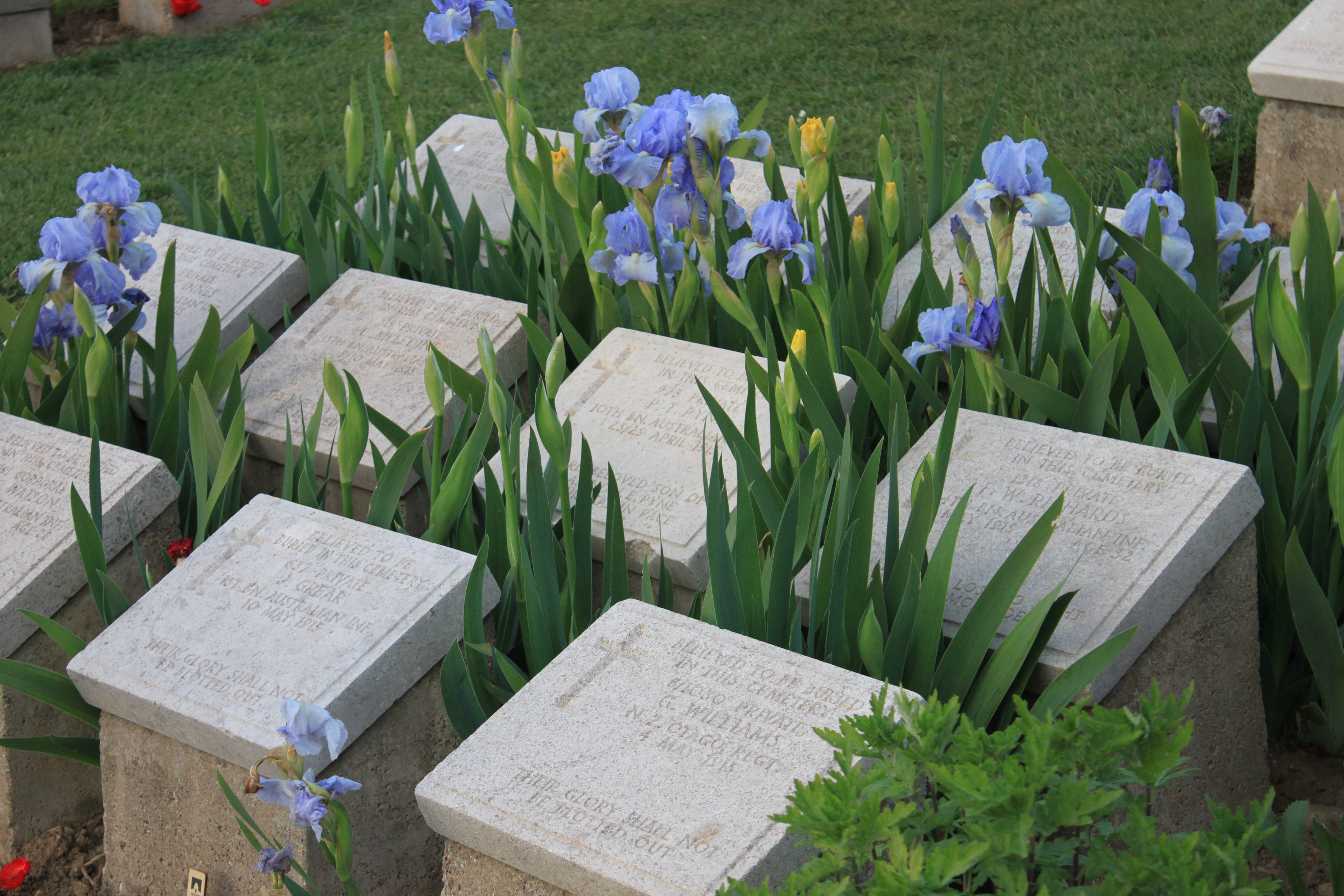
Those fallen soldiers were identified and buried with full honours and grave markers in cemeteries on the land of the people whose shores they had invaded.
“They have become our sons as well.”
A charismatic and brilliant Turkish military leader distinguished himself at Gallipoli.
His iconic command, “I do not order you to fight, I order you to die,” inspired his men to hold the heights until reinforcements arrived.
Kemal Atatürk went on to lead modern Turkey out of the ashes of the Ottoman Empire. And he never forgot his time on Gallipoli, and the brave ANZAC combatants.
Today, a memorial at Gallipoli records Atatürk’s words to the families of the men who died invading his homeland.
“You, the mothers, who sent their sons from far away countries, wipe away your tears; your sons are now lying in our bosom and are in peace. After having lost their lives on this land, they have become our sons as well.”
I challenge you to read that without tearing up.
I know I am.
But was it even Atatürk who wrote those words? Even that has been challenged.
Hit or a myth?
Many historians question the truth behind these stories. They point to clear examples of antipathy between the Turks and Australians to counter the prevailing belief that the two sides became best mates.
Let’s face it. After months stuck in fly-blown trenches taking potshots at each other, neither side would have been feeling very positive about the enemy.
But that’s not the way myths and legends work.
The tale I’m telling here has been evolving for more than a century. It’s a legend that has grown to serve many masters.
A young nation was crying out for a foundation story.
Australia needed to define itself as distinct from our Imperial motherland.
And Gallipoli, where Australia’s sons made a stand and distinguished themselves for their unique character, did the job.
Anzac is the legend Australia needed.
Is the Gallipoli legend lacking in nuance, and does it overlook many uncomfortable truths? Undoubtedly.
But myth transcends reality and becomes something much greater than the sum of its parts.
That’s because human beings are storytellers. And sometimes real life just doesn’t cut it. It needs a bit of a do-over.
For example… if you ask me, Jesus was a charismatic and spiritually evolved dude who had some great ideas about looking after each other and making the world a better place.
Cleopatra definitely picked her nose. She may even have eaten her boogers.
Elvis laid curly ones in the toilet just like the rest of us.
Marilyn got her period every month like all people with lady parts all around the world, and would have had plenty of hormonal breakouts to go with it.
But who wants to think about that? Definitely not me.
Myths and legends are things people can hold onto.
They serve a higher purpose than pure fact.
We spend all day, every day, wrestling with the itty, bitty, gritty facts of everyday life.
Fantasy allows us to dream of a more perfect existence. Something that elevates us above reality.
It reflects who we want to be, what we aspire to, and how we hope the world will remember us.
And it makes the unimaginable, bearable. It gives meaning to the impossible.
It shapes the future in a way it wouldn’t if the rough edges hadn’t been sanded off.
That’s why it seems fitting that Gallipoli and the Dardanelles—itself the focus of human mythmaking for many thousands of years—has assumed such an important role in Australia’s own post-colonial foundational legend.
Fantasy becomes reality
By the Second World War, the myth of the Aussie soldier as a devil-may-care, irreverent, brash, laugh-in-the-face-of-danger force-of-nature as forged in the crucible of Gallipoli had inspired a new generation of young Australians on the frontline.
They also took with them our suspicion of authority, and “yeah, nah, mate, steady on” attitude to anyone who got a bit too big for their own boots.
The Australians who headed off to WWII did so with the Anzac legend in mind. They had something to live up to and inspire them.
My favourite quote from the Australian military brass in the Second World War is the following from Brigadier George Vasey to his troops: “Here you bloody well are and here you bloody well stay. And if any bloody German gets between your post and the next, turn your bloody Bren around and shoot him up the arse.”
But the best assessment of our Aussie troops in WWII belongs to the enemy; namely the legendary German Field Marshall, Erwin Rommel, known as the Desert Fox: “If I had to take hell, I would use the Australians to take it and the New Zealanders to hold it”.
My first visit to Anzac Cove was transformative.
As I stood on the perfectly manicured green lawns between the modest headstones of the young men who died there serving an Empire’s folly and looked up at the impossibly steep cliffs they were expected to scale, I started weeping.
I didn’t stop until I boarded the ferry to cross the Dardanelles Straits.
I’ve returned several times since, including once for the centenary of the Gallipoli landings in 2015, and once with my own two children.
My son, at the time, was just shy of the age Jim Martin was when he landed there.
Aftermath
Of the half a million Australians who served in the First World War, over 60,000 were killed. That was somewhere between 10-15% of the male population aged between 18 and 44.
It was a shocking blow. We had the highest death-rate relative to our population of all the countries in the British Empire.
That was why we needed the Anzac legend. We needed to believe that something positive had come out of the tragedy; that the terrible losses counted for something.
One of those we lost was Private Jim Martin.
On the 25th of October 1915, he was diagnosed with typhoid fever and evacuated from the front. He died the same day and was buried at sea, just three months shy of his 15th birthday.
Legend has it that his mother’s hair turned white when she heard the news.
She never recovered from the shock of losing her son.
Anzac Day lives on
Once upon a time, the powers that be were concerned that the Anzac Day service would dwindle as veterans of the two world wars disappeared.
There are bigger numbers now, than ever. Thousands of Australians also gather at Anzac Cove in Türkiye for the dawn service held there every year.
Don’t get me wrong. I’m all about peace. War can go to hell… quite literally.
But that’s the point of Anzac Day. It’s not about celebrating war.
It is anything but a display of military might. There is no parade jam packed with phallic missiles, squeaky tanks, and goosestepping troops.
Anzac Day is a day of remembrance for all of us.
Anzac Day is a solemn tribute to the making of a young nation.
It’s also a reminder of how war resonates through generations, and an expression of gratitude for those who fought and died to defend the things we hold dear.
Underpinning it all is a silent plea that perhaps we will never have to experience anything like Gallipoli again.
With the shitstorm engulfing the world right now, and cosplaying warriors calling the shots, it couldn’t come at a better time.
Think of that, as the Australian flag unfurls in the chill morning air, and the immortal lines from the Ode of Remembrance ring out:
“They shall grow not old, as we that are left grow old;
Age shall not weary them, nor the years condemn.
At the going down of the sun and in the morning
We will remember them.”
Lest we forget.
