In the aftermath of the Bondi attack, Australians respond in a way that reveals something profound about our national identity.

It was the vision that gripped the world
A passer-by tackles one of the Bondi shooters, wrestles him to the ground, and grabs his gun.
In a moment of extraordinary bravery, that man put his life on the line to save strangers. He took multiple bullets from the second gunman for his troubles.
Then we learnt the hero’s name.
Ahmed al Ahmed. The Aussie hero of the day came here as a Syrian migrant ten years ago. He is a Muslim man who risked his life to save Jewish strangers.
It couldn’t have been a more Aussie moment.
Why?
When shit goes down, we help each other
It’s that simple.
He might have been born half a world away, but Ahmed al Ahmed gets it.
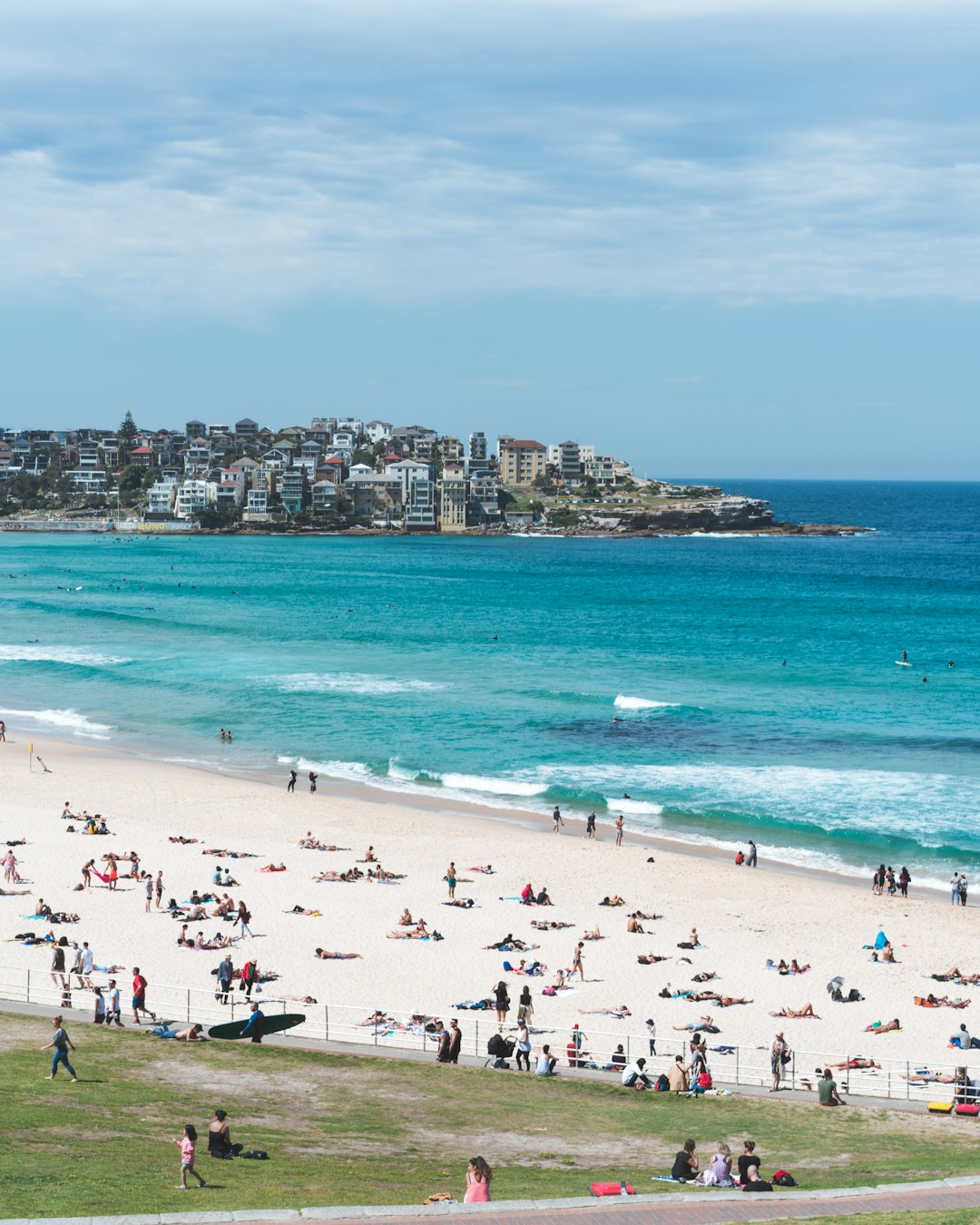
He saw two men shooting at a group of Jewish Australians celebrating the beginning of Hanukkah in a park by Australia’s most iconic beach.
It wasn’t self-defence. They weren’t shooting at him. He was across the road having coffee with his cousin. But it was enough that they were shooting fellow Australians.
As his parents put it after the event, “When he did what he did, he wasn’t thinking about the background of the people he’s saving, the people dying in the street.”
“He doesn’t discriminate between one nationality and another. Especially here in Australia where there’s no difference between one citizen and another.”
Australia is a place of refuge
Ahmed didn’t know it at the time, but he had at least one thing in common with an elderly man who died on the green lawn fringing Bondi’s iconic golden beach.
Alex Kleytman was a Holocaust survivor; Ahmed came to Australia ten years ago, when he fled Syria to escape ISIS’ reign of terror. Both men arrived here wanting to put a violent past behind them.
It’s true of so many Australians. Perhaps that’s why we’re so quick to help each other.
We empathise with each other because so many of us came here to build a better life in a safer place.

We come together as one
Now, twenty-four hours after the attack, here are just some of the things that are happening:
· Queues at blood donation centres around the country are out the door.
· The state premier is calling for more—not less—gun control.
· Ahmed al Ahmed, is in hospital recovering after sustaining multiple gunshot wounds. A GoFundMe page for him has raised A$1.7 million and is still climbing.
· Our Prime Minister laid a floral wreath at the site of the attack.
· The road outside the Bondi pavilion is a carpet of bouquets from people arriving to pay tribute to the dead, and the many Australians who helped them in their hour of need.
· The leader of the opposition Liberal party in New South Wales, which is our equivalent of America’s Republicans and, confusingly, not very “liberal,” was interviewed by our local version of Fox News. The journalist tried to turn it into an attack piece on the government’s anti-Semitism policy. A horrified Kellie Sloane shut her down.
· At a National Cabinet meeting between our Prime Minister and all the state premiers, a resolution was passed to tighten our gun laws.
· Australia’s Islamic community has refused to handle the shooters’ bodies or perform religious burial rites for them because the Qu’ran forbids the murder of non-combatants. The message? Heinous acts like these will send the perpetrators straight to hell.
Aussie, Aussie, Aussie.
This is the way things work here.
As the tragedy unfolded, lifeguards, passing nurses and doctors, off-duty police officers, and ordinary Australians ran to offer aid and comfort to a group of fellow Aussies who were attacked while they were celebrating together by the ocean.
In that moment, they were Australians above all else.
We don’t look for difference. We don’t hide. We don’t find someone to blame. We take care of each other.
There are always a few who try to make hay while the rest of us are checking in on each other. But they get told in no uncertain terms.
It’s part of who we are.
And it got me thinking about what it is that makes us this way.
The tall poppy syndrome
For one thing, exceptionalism has no place here.
We’ve got a thing here called the “tall poppy syndrome.” It means we cut down anyone who rises above the pack.
That’s not always a good thing. It means individual achievement isn’t always celebrated as much as it should be.
But at its heart, it means we think of each other as equals. We don’t put people up on pedestals.
Because we’re not all desperately scrambling over each other to get to the finishing line first, we look sideways at those who do. Donald Trump wouldn’t have made it out of preschool with his self-adulation and bloated pride intact.
In Australia, it doesn’t matter where you come from. It doesn’t matter which school you went to. It doesn’t matter what car you drive. As long as you’re not “up yourself,” and “think your shit doesn’t stink,” we’ll help you.
Because, as far as most of us are concerned, we all bleed red. And we don’t have much time for those who think otherwise.
Welcome! But leave your shit at the door.

If you want to know our immigration policy, that’s pretty much it.
We celebrate being a multicultural nation. We’re proud of it.
One in three of us were born overseas.
But when you arrive, we’ll be making you our own. Like it or not, you’ll be getting a new name if the original’s a bit of a mouthful. Mohammed will become ‘Mo’, Deepika will be known as ‘Dee,’ and Dimitri will be ‘Jimbo.’
We’ll definitely adopt your food. The go-to street-food favourites here are Turkish gözleme, Chinese dumplings of every type, and HSP—Halal Snack Pack for the uninitiated; it’s a plate of grilled meat with fries, melted cheese, and chilli sauce. And let’s not forget every Aussie kid’s favourite fast food: a tuna nori roll. Yes, really.
Not a weekend goes by without a festival celebrating one of the hundreds of cultures whose people have chosen to make Australia their home. It’s why Sydney’s Jewish community had gathered to celebrate the Festival of Light by the sea. It’s what we do.
But there’s one thing most Australians don’t want to hear about. If you have stories about rusted-on, intergenerational shit from your home country, you can check it at the cloakroom before you come in.
Start banging on about the battle in 1549 when the neighbours crossed the border and stole a chunk of land from your homeland, and the response you’ll most likely get here is, “time to build a bridge and get over it, champ,” or “have a cup of concrete, mate, and harden the fuck up.”
That hasn’t always sat well with me.
Don’t get me wrong. I’m not advocating this attitude. I’m a historian. I’m all about learning from the lessons of the past. So, this Australian characteristic has grated on me over the years.
But here’s the thing. After having children and wanting to raise them in a place that’s safe and accepting of difference, I’ve realised the value of drawing a line in the sand. There’s a lot to be said for defusing a ticking time bomb by setting aside difference and finding common ground. It’s about moving on.
You hear it all the time here when things get heated.
“Steady on, mate.”
“Take it easy, champ.”
“Yeah, nah, she’ll be right.”
And, most of all, “C’mon. Give it a rest. Shout you a beer?”
We really, really, really hate authority
Did I mention we hate authority?
Our soldiers in both world wars were regarded as amongst the most dogged and fierce troops sent to the front. They were also the most disobedient. They ignored orders and pushed back against decisions they didn’t agree with.
It’s a funny thing, because as much as America likes to call itself the land of the free, I reckon we’ve cornered that market.
We swear, and we drink. Admittedly, probably a little too much of both.
Most of us don’t care what you do in your bedroom, as long as it doesn’t involve children or animals.
You’re free to worship whatever floats your boat. But don’t start your happy-clapping at our front door, because almost 40 per cent of us have no religious faith at all, with only 4 per cent of us heading to church every week. As for the so-called “Muslim invasion,” only 3 per cent of us are Islamic.
All in all, we’re not inclined to toe the line.
Thank fuck we got the convicts rather than the puritans
I’ve said it before, I’ll say it again. I’ll always be glad that Australia got a bunch of political and social exiles and petty crooks rather than the god-botherers. Although, of course, First Australians would have preferred neither.
But the original lawbreakers who made it out here were, for the most part, small-time criminals. Serious crime got you an appointment with the hangman. Nick a loaf of bread, turn a trick on the docks, or forge a banknote, and you’d find yourself on a crowded convict transport headed for the Antipodes. We also got our fair share of political prisoners, including a raft of Irish rebels.
After their sentences were served, former convicts were offered land grants to stay here and build the colony. Many of them did so. But they were left with a solid mistrust of the British officials in charge.
It’s a characteristic that’s woven through Australia’s fabric even today.
For the common good
It seems contradictory that we don’t like being told what to do, but we’re still happy to sign up to compulsory government initiatives.
The catch? We’ll do it when they’re things that make our community better.
Gun controls. Universal healthcare. Paid parental leave. A universal disability support scheme. Paid carers’ leave. Paid annual holidays. Paid sick leave. Employer-funded superannuation.
It’s the same reason we sucked up lockdown during COVID. Sure, there was a noisy minority who made a fuss about vaccinations and social distancing. But when it came down to it, we were more concerned about making sure our neighbours didn’t die, than we were about preserving individual freedoms.
Again, it all comes down to looking out for each other.
The democracy sausage

The other thing that makes us who we are is our electoral system.
For a start, electoral boundaries are decided by an apolitical, non-partisan electoral commission that also supervises our elections.
And let’s not forget compulsory voting. It keeps the lunatic fringe right where they belong: on the fringes. Because when you’re forced to stand in that booth and make a choice, most of us don’t grab a pencil and choose an utter numpty to lead us.
The other thing that works for us is that election day here is a Saturday. Polling places are often local schools, which run BBQs and bake stalls to raise funds. It’s why we talk about having our “democracy sausage.” While we wait to vote, we have ourselves a snag (transl: sausage) in a slice of bread with sauce (transl: ketchup).
But we don’t vote for our legal and law enforcement officials. They rise through the ranks based on merit. They’re appointed by peers, rather than public acclaim. And we’re quite OK with that. I’d much rather a sober-minded and serious adherent to the legal justice system was hearing my case, than someone who ended up in office as a political or popular appointment.
The sum total of all this is that our society is missing many of the adversarial platforms that tear America to pieces. We trust the system because it’s not spawned by an “us vs. them” mentality.
The past should not define our future.
This extraordinary land is blessed in so many ways. People come here for a fresh start. But a clean slate only works if it’s wiped clear of all the layers of accumulated chalk that make it difficult to read.
That doesn’t mean you ignore the past. My home state, Victoria, recently passed into law a treaty with Indigenous communities to acknowledge the horrific losses Aboriginal people endured when Britain colonised this continent.
The treaty allows us to apologise for past crimes and make amends. That’s a wonderful, and very important, thing.
Anti-migration? Don’t make me laugh.
They are the guardians of the longest continuing cultural tradition in the world. To put that in context, the early human migration out of Africa began 100,000 years ago.
Compared to Aboriginal Australians, the rest of us are newbies. My family on both sides have been here since the early 1800s. For someone of European heritage, that’s almost as old a connection as you can get. But compared to 60,000 years? Don’t make me fucking laugh.
It’s why I get hot under the collar when the anti-migration lobby start carrying on. Compared to Indigenous Australians, we’re all recent arrivals.
And we’re all very lucky to call this place home.
I am, you are, we are Australian.
Australia has an unofficial anthem that captures all this. It’s a stirring and beautiful song.
No, it’s not The Angel’s classic, “Am I ever going to see your face again?” and its rousing, crowd-pleasing response, “No way, get fucked, fuck off!”
It’s “I Am Australian,” written in 1987 by The Seekers.
Anytime I hear it, it brings tears to my eyes because it captures all that is wonderful about this great southern land.
Today, it resonates even more than ever.
This is the chorus:
“We are one
But we are many
And from all the lands on earth we come
We’ll share a dream
And sing with one voice
I am, you are, we are Australian.”
© Bruce Woodley, Dobe Newton 1987
This is who we are.
Today, we’re not British or Indian, Chinese or Syrian, Italian or Greek.
We’re not Christian, Jewish, or Muslim; Buddhist, Taoist, or Hindu.
Today, we’re Australian above all else.
We will get through this and be stronger than ever.
I’m sure of that.
